Warranty, seller remedy or paid repair: sort the path at intake
A practical intake routine for separating possible seller remedies, manufacturer warranties and paid repair work without making premature promises.

A faulty device often reaches the counter with one sentence: “It is still under warranty.” That is not a completed job; it is the start of a clarification. A quick promise or refusal can create expectations the team cannot later meet.
The operational distinction is simple: a consumer remedy against a seller, a manufacturer warranty and a paid repair are different paths. Collect facts first, then set the next step. This is operational guidance, not legal advice.
Three paths, three opening questions
| Path | First question | Useful next step |
|---|---|---|
| Consumer remedy | Who sold what, and when, to whom? | Match the receipt, item and fault report to the correct seller |
| Manufacturer warranty | Is there a current warranty with applicable conditions? | Check the warranty document, serial number and prescribed claim route |
| Paid repair | What should be inspected or repaired? | Agree the diagnostic scope, price or price range and approval before work |
The EU Sale of Goods Directive concerns contracts between a seller and consumer. It does not automatically make every repair business the decision-maker for every case. A repair business can still help by recording facts, avoiding premature coverage promises and pointing the customer toward the appropriate route.
A five-step intake routine
- Describe the fault; do not classify it. Record the item, model, serial number, visible condition, accessories and reported symptom. “Does not charge” is an observation; “covered by warranty” is not yet a decision.
- Clarify evidence and contact. Ask for purchase date, seller, receipt and any manufacturer warranty. Retain a copy or photo only where it is necessary for that purpose.
- Make the job path visible. For example: “seller remedy to be checked”, “manufacturer warranty route to be checked” or “paid diagnosis requested”. An open status is safer than an inaccurate promise.
- Separate diagnosis from costs. Where inspection could be chargeable, agree its scope and amount or range in understandable terms before starting. A technical assessment is not a legal decision on a consumer remedy.
- Report the result with its evidence. Keep the finding, review date, only-needed images and the next contact traceable. A refusal or a move to paid work needs a new, clear approval.
Country context: same discipline, different terms
In Germany and Austria, teams commonly encounter Gewährleistung and Garantie. In France, customers may refer to garantie légale de conformité and garantie commerciale; in Spain, garantía legal and garantía comercial. Teams in Czechia, Croatia and Slovenia can use clear fields for seller, purchase date and local warranty terminology.
The practical rule remains: do not infer a legal outcome from a customer’s label alone. Even within the EU, deadlines, remedies, evidence questions and the individual contract depend on applicable national law. EU directives do not apply directly in Türkiye; businesses there should check their contract, consumer law and manufacturer conditions under Turkish law.
When the path changes
A possible consumer-remedy or warranty route may not proceed, yet the customer relationship need not stop. If the seller is unavailable, a warranty condition does not fit, or another damage is found, explain the outcome in separate steps:
- What was technically found?
- Which route was checked, and what is the result?
- What paid option is available now—diagnosis, parts, labour and approval included?
This avoids turning a disappointing message into a silent invoice. One central job record with a status, document note and approval keeps the counter, bench and customer contact aligned.
Questions about sorting the path
Can a workshop write “warranty case” on the job?
A neutral status such as “warranty route to be checked” is safer. Whether and on what terms something is covered depends on the contract, documents and applicable law.
Is a serial number enough without a receipt?
It may help identify an item or a manufacturer warranty. It does not automatically establish the contracting seller or a consumer remedy.
What if the case becomes a paid repair?
Keep the paths separate. Record the review first; if paid diagnosis or repair follows, obtain separate approval for it.
Keep reading
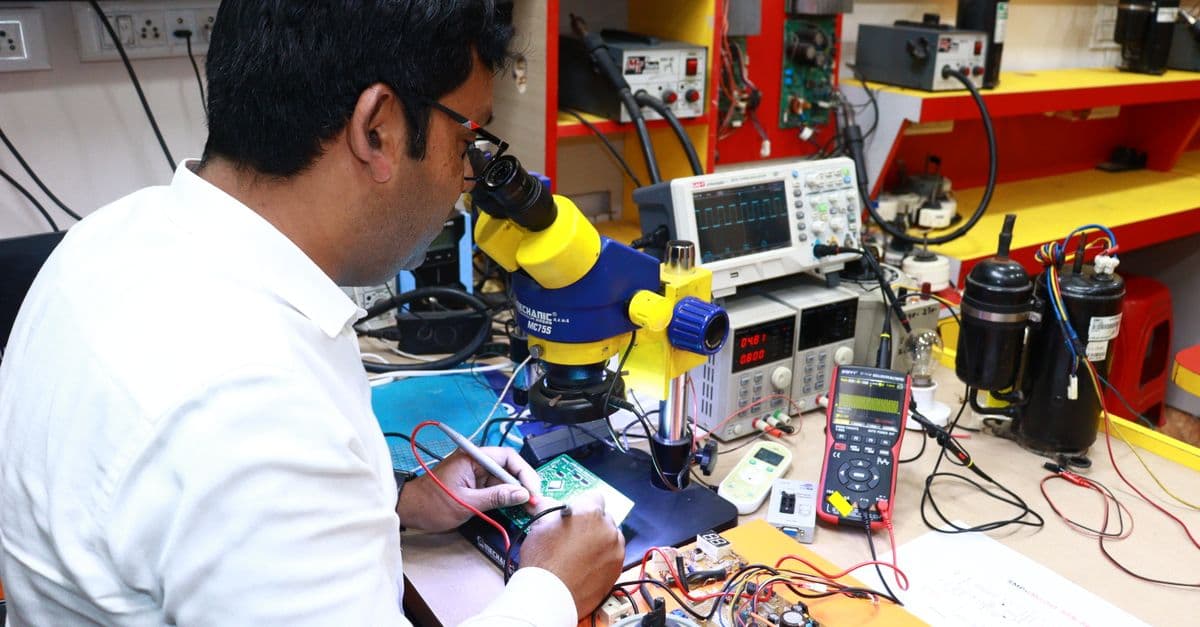
Bonus Réparation: a proof workflow for the repair counter
A practical way for French repair businesses to check eligibility, show the deduction and retain useful evidence.
Read article
Assessing used parts: a safe workflow before fitting
How repair businesses can assess used or refurbished parts before quoting or fitting them.
Read article
Customer data requests: a clear workflow for repair and service businesses
How to log, verify and answer requests for access, correction or deletion without silently changing a repair record.
Read articleReady for less paperwork?
Start for free or get advice with no obligation. We set everything up — you carry on with the repairs.
14-day free trial · Setup included · Cancel any time