Repair orders without data clutter: what truly belongs in the job
A practical guide for workshops and service businesses: collect data for a purpose, keep it traceable, and clear it out on a routine.
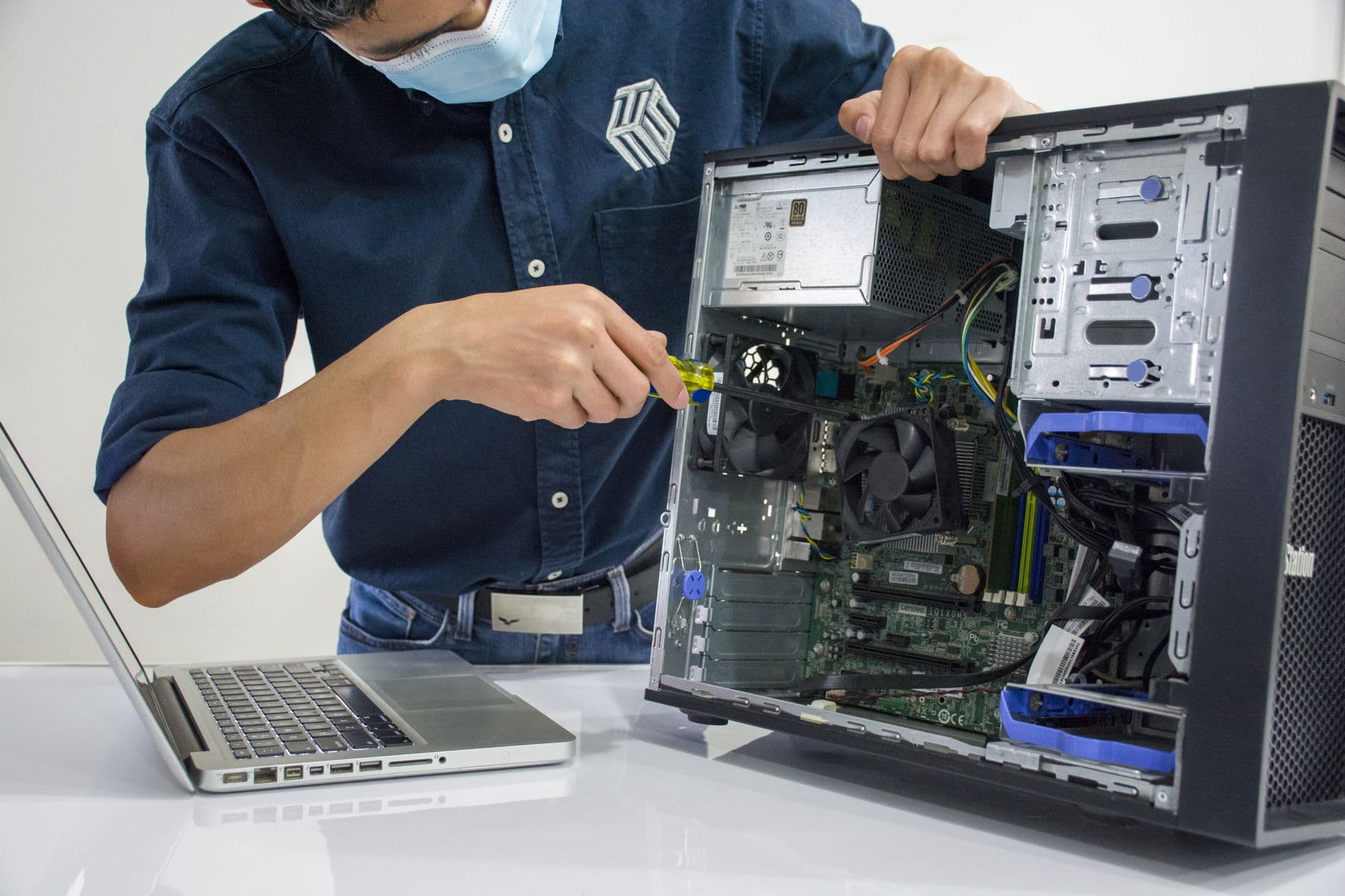
When a device or vehicle is booked in, it is easy to record more than the job needs: an ID copy, private notes, credentials, or an extra phone number “just in case”. That does not improve service. It adds risk and makes the record harder to use. A sound repair order captures only the information staff genuinely need to receive, perform, return, and document the work.
Start with purpose, not a field
The GDPR requires personal data to be adequate, relevant and limited to what is necessary for its purpose (Article 5(1)©). It also does not permit unlimited storage (Article 5(1)(e)). Ask one operational question before adding any field: Which exact task in this job needs it? If there is no clear answer, it should not be part of the standard form.
| Job moment | Usually useful | Not automatically needed |
|---|---|---|
| Check-in | name or business, reachable contact, job number | ID copy, private extra contacts |
| Identification | device/model, serial number where needed, fault description | sensitive details unrelated to the repair |
| Follow-up | preferred contact method, status | messages through unapproved channels |
| Return | work completed, time, receipt confirmation where appropriate | ID or payment-data copies in the job |
A serial number can be sensible when it prevents mix-ups or is needed for warranty or parts. An ID photograph is not a convenient default answer to an uncertain collection. Use a proportionate, documented handover process instead.
A lean routine for the team
- Define before check-in: Give each field a purpose, an access role, and a retention rule.
- Ask only what fits: At the counter, collect data linked to the job. Keep free-text boxes out of speculation and private details.
- Handle credentials separately: If test access is unavoidable, use only the access needed, do not copy it into free text, and remove it after testing.
- Work in the job record: Put questions, approvals, and status updates with the job rather than in scattered chats. A shared digital job record can reduce loose notes.
- Clear out routinely: When the defined period ends, delete or archive completed records securely unless a duty or documented reason requires otherwise.
Cross-border work: shared core, local review
For EU businesses, the GDPR is the shared framework; national authorities explain local application, including Germany’s data-protection authorities, France’s CNIL, and Spain’s AEPD. Croatia and Slovenia are EU Member States as well. In Turkey, the Personal Data Protection Law No. 6698 sets principles including lawfulness, purpose limitation, relevance, and proportionality.
A common core form is useful, but wording on notices, consent, retention, and representation should not simply be translated. Have local differences reviewed, especially for cross-border customer data or special categories of data.
Takeaway
Data minimisation does not get in the way of good service. It makes a job easier to read: contact, item, issue, approval, and return are clear, while the rest stays out. Start with an inventory of your form fields and remove any field whose purpose nobody can explain.
Frequently asked questions
Do we always need consent for a repair order?
Not necessarily. The appropriate legal basis depends on the situation. Performing a contract may involve a different basis from consent. Have the specific workflow reviewed.
May staff look at content on a customer device?
Only where necessary for a clearly described test or diagnosis. Organise tests to expose as little private content as possible and do not document private content in the job.
How long may we retain completed orders?
There is no one-size-fits-all period. It can depend on statutory retention obligations, warranty, contract, and purpose. Set a reasoned retention schedule and review it locally.
Keep reading

Customer handover record: clearer collection and delivery evidence
A practical workflow for repair businesses and retailers: record condition, scope, time and confirmation whenever goods change hands.
Read article
Fiscal QR codes on receipts: verify, classify and run a reliable process
What a fiscal QR code on an Austrian receipt can show, why Germany is different, and a practical checking workflow for small businesses.
Read article
Invoice QR codes: verify payment data before customers scan
A practical control workflow for EPC QR codes, payment references, reconciliation and privacy.
Read articleReady for less paperwork?
Start for free or get advice with no obligation. We set everything up — you carry on with the repairs.
14-day free trial · Setup included · Cancel any time