Customer-supplied parts: a clear workshop process
How repair businesses can assess, document and communicate about customer-supplied parts without premature promises.

A customer-supplied part may look like a simple request. For a repair business, it is not a standard job: provenance, fit, condition and the boundary of the agreed service need to be clear before installation. A repeatable process protects the schedule and makes handover easier to understand.
Clarify before promising
Do not end intake with a blanket “we can fit it.” Four questions are useful:
- Which vehicle or device, and which exact variant? A part number, serial number or vehicle identification number helps match it.
- What has actually been supplied? Record packaging, completeness, visible damage and connector details at intake.
- What work is being ordered? Installation only, or also diagnostics, programming and a functional test?
- What happens if it does not fit? Agree in advance whether assessment time is chargeable and who approves alternatives.
A photo of the part and its packaging belongs in the job record. It is not a technical inspection, but it helps avoid later disagreement about what was handed over.
| Checkpoint | Before the appointment | At intake | Before handover |
|---|---|---|---|
| Matching | request the part number | compare the available data | record the part used |
| Condition | do not promise fit | photograph condition and contents | identify old part and packaging |
| Scope | name the requested work | document approval | explain the test result |
| Alternative | agree the decision route | confirm contact person | record next steps |
Treat technical assessment as its own task
A part can look right and still fail to fit: revisions, connector variants, software versions or incomplete kits often emerge only during diagnosis. Plan assessment as a distinct activity, with a clear time limit and a stop point before additional work.
This matters for scheduling. Do not reserve an entire lift or bench slot for an uncertain installation. A short assessment slot, an update and then installation keep other appointments predictable.
Across countries: keep the process clear; check local law
Warranty, liability and consumer-law details differ between Germany, Austria, Switzerland, France, Spain, the Czech Republic, Croatia, Slovenia and Türkiye. The business role also matters: seller, installation-only provider or diagnostician may face different obligations. An internal job template should therefore not make blanket legal promises.
A neutral practice is to document the customer-supplied part, the agreed scope and the assessment result. Where there is uncertainty, check the applicable local rules and the business’s terms. This article is not legal advice.
Handover without surprises
At completion, “installed” is not enough. Briefly state whether function was tested, any limitations, and which documents or removed parts are being returned. If the part could not be used, the record still matters: it shows why work stopped and what decision is needed next.
A sound process does not remove technical uncertainty. It does make the uncertainty, customer approval and workshop time visible in the same place.
Keep reading
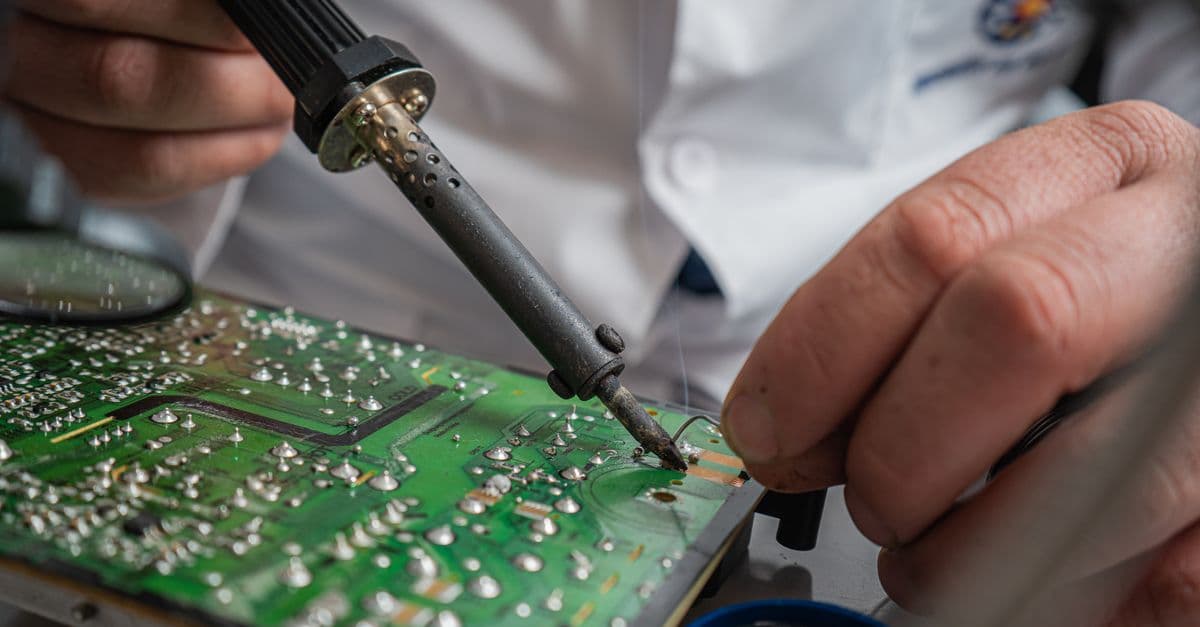
Final functional checks before collection: a calmer last step in repair work
A short, recorded final check helps repair businesses prevent avoidable collection questions and explain results clearly.
Read article
Defining a repair job: consent, diagnosis and extra costs
A country-aware workflow for repair businesses: agree what is inspected, what may cost money and when a new approval is needed.
Read article
Card payments during an internet outage: a calm plan for service counters
A practical, country-aware routine for a payment-terminal interruption: check the facts, communicate clearly, protect records and reconcile later.
Read articleReady for less paperwork?
Start for free or get advice with no obligation. We set everything up — you carry on with the repairs.
14-day free trial · Setup included · Cancel any time